How to Use DeFi Safely
A practical guide to using DeFi more safely in Australia - self-custody wallets, researching protocols, understanding smart-contract risk and impermanent loss, managing token approvals, and being sceptical of high yields. Plus the complex Australian tax and regulation picture.
The short answer
DeFi, decentralised finance, lets you trade, lend, and earn yield directly from your own wallet, without a bank or exchange in the middle. The freedom is real, and so is the risk: there's no safety net, no help desk, and no one to reverse a mistake. To use it more safely:
- Use a secure, self-custody wallet, ideally a hardware wallet, and never your seed phrase anywhere it could be exposed.
- Start small and understand before you commit, DeFi is unforgiving of "aping in" blind.
- Research the protocol, is it audited, reputable, and established, or anonymous and brand-new?
- Know the specific risks, smart-contract bugs, impermanent loss, scams, slippage, and risky token approvals.
- Be deeply sceptical of high yields, outsized "guaranteed" returns are the oldest red flag there is.
DeFi is genuinely more advanced and higher-risk than using a regulated exchange, and it has none of the consumer protections Australians get elsewhere. This guide explains how it works and how to reduce the risks, but treat it as a domain to enter carefully, with money you can afford to lose.
Note: This is general educational information, not personal financial advice or a recommendation to use DeFi. DeFi is high-risk, largely unregulated, and offers no recourse if things go wrong. Tax treatment is complex. For advice specific to you, see an ASIC-licensed adviser; for tax, a registered tax agent.
What you'll need
- A non-custodial wallet you control (see our guide on setting up a wallet), a hardware wallet adds security.
- Some crypto for transactions and to cover network fees (gas).
- A willingness to research protocols before using them.
- Money you can genuinely afford to lose, and the patience to start small.
What DeFi actually is
DeFi (decentralised finance) refers to financial services, trading, lending, borrowing, earning yield, built on blockchains and run by smart contracts (self-executing code) rather than by banks or companies. Instead of an intermediary holding your money and processing transactions, you interact directly from your own wallet with code on the blockchain.
The appeal is that it's permissionless (anyone with a wallet can use it), self-custodial (you keep control of your funds), and often offers services or returns not available through traditional finance. The trade-off is that you carry all the responsibility and risk: there's no institution standing behind it, no customer support, and no one to undo a bad transaction or recover stolen funds.
| Centralised (CeFi / exchange) | DeFi | |
|---|---|---|
| Who holds your funds? | The platform | You (your wallet) |
| Intermediary | Yes (a company) | No (smart contracts) |
| Consumer protection | Some (regulated platforms) | Essentially none |
| Support / recourse | Customer support exists | None, you're on your own |
| Complexity | Lower | Higher |
The main building blocks of DeFi
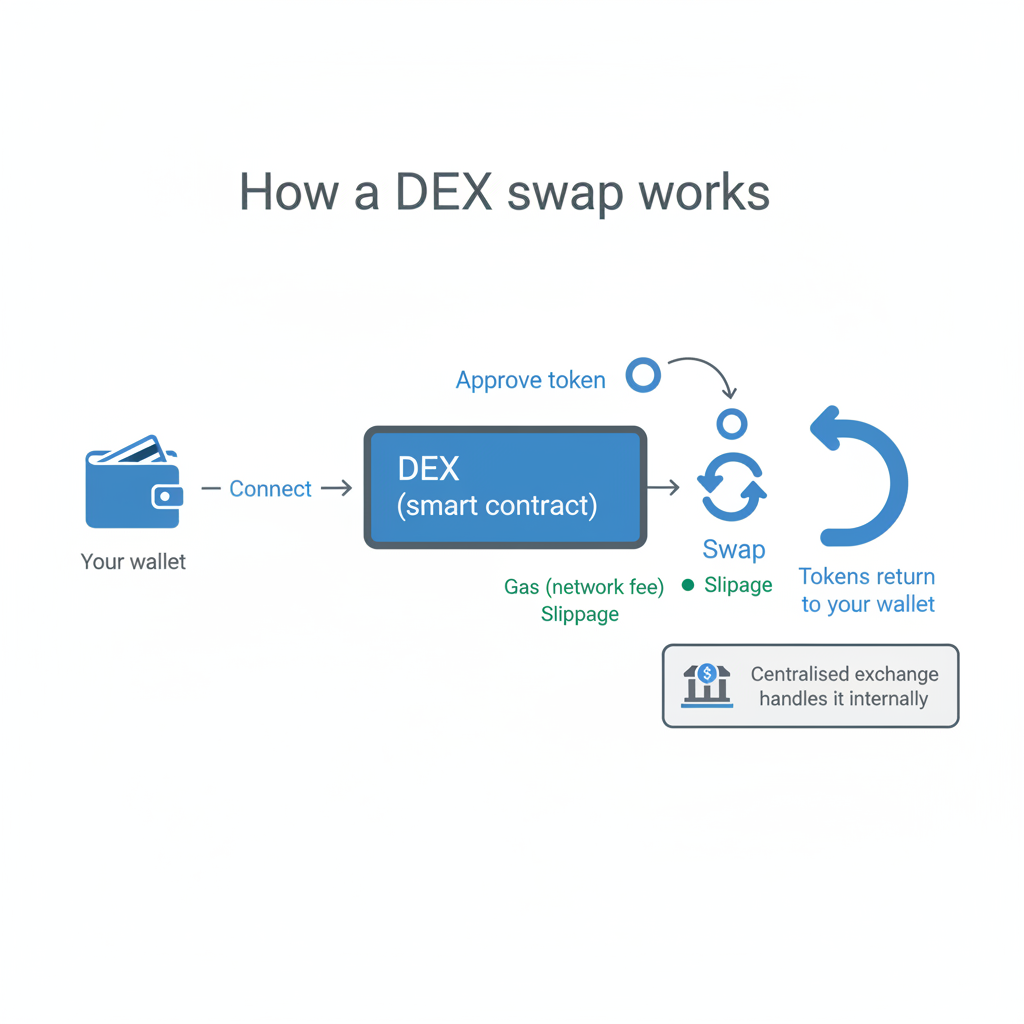
- Decentralised exchanges (DEXs): swap one crypto for another directly from your wallet, without an intermediary. You manage the network, fees, and slippage yourself.
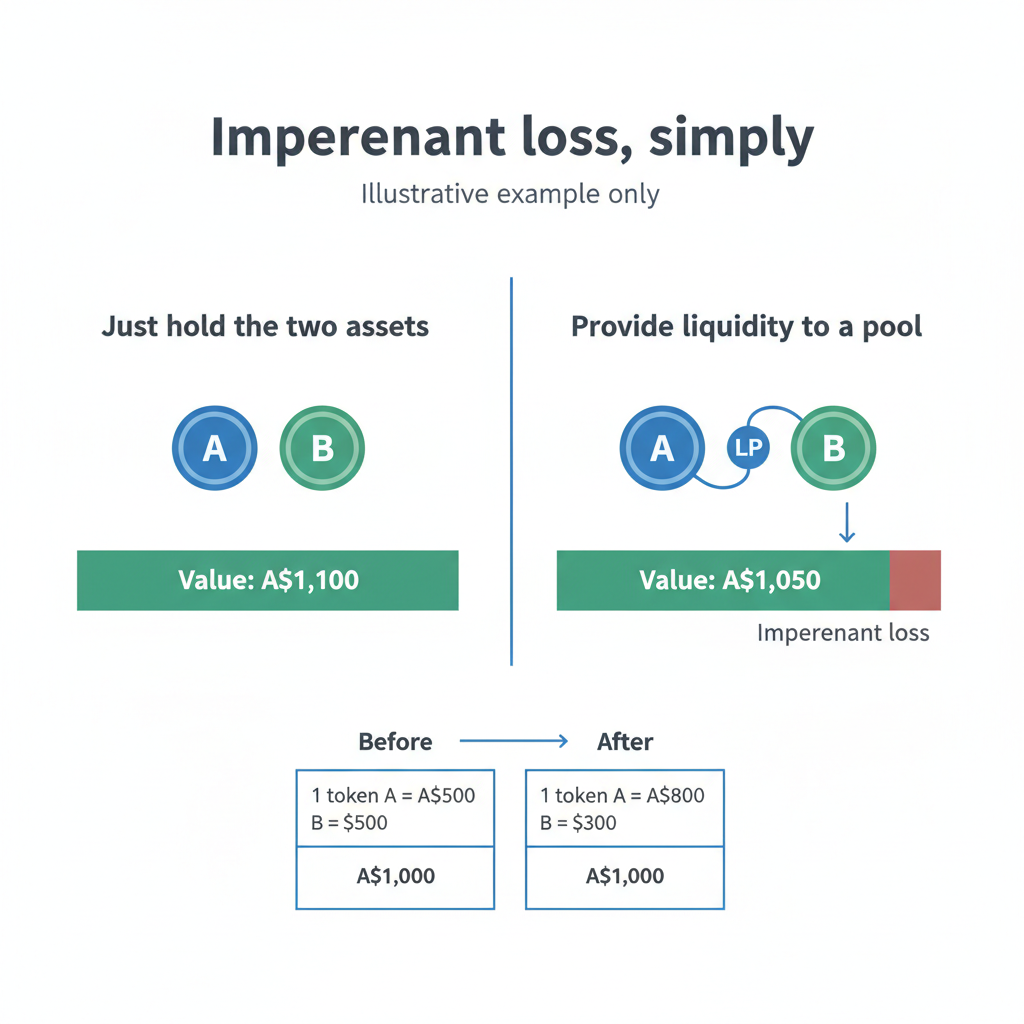
- Liquidity pools / providing liquidity: you deposit a pair of assets into a pool that others trade against, earning a share of fees, but exposed to impermanent loss (below).
- Lending and borrowing: lend your crypto to earn interest, or borrow against crypto collateral, via protocols rather than a bank.
- Yield farming / staking: deposit assets into protocols to earn rewards, often with the highest advertised returns and, correspondingly, the highest risks.
How to use DeFi safely: the steps
1. Start with a secure, self-custody wallet
DeFi is accessed through your own wallet, so wallet security is everything. Use a reputable non-custodial wallet, and for meaningful amounts, connect a hardware wallet so your keys stay offline even while interacting with protocols. Never enter your seed phrase into any site, and be cautious about which sites you connect your wallet to.
2. Start small and learn the mechanics
DeFi is unforgiving of mistakes. Before committing real money, understand exactly what a protocol does and what you're approving. Start with small amounts to learn the process, connecting a wallet, approving a transaction, swapping, providing liquidity, before scaling up. Many costly DeFi losses come from people interacting with something they didn't understand.
3. Research the protocol before you use it
Not all protocols are equal. Before depositing funds, check:
- Is it audited? Reputable protocols undergo security audits (though audits don't guarantee safety).
- Is it established and reputable? A long track record, significant total value locked (TVL), and a known team are positive signs; anonymous teams and brand-new protocols are higher-risk.
- What's the community saying? Look for credible, independent discussion, not just hype.
Common mistake: depositing into a brand-new, unaudited protocol promising huge yields because it's trending. This is exactly how rug pulls and exploits drain funds.
4. Understand the specific DeFi risks
DeFi has risks beyond normal crypto volatility:
- Smart-contract risk: the code can have bugs or be exploited, even audited protocols have been hacked, draining user funds with no recourse.
- Impermanent loss: when you provide liquidity, price changes between the paired assets can leave you worse off than simply holding them. It's a genuine, often-misunderstood cost.
- Scams and rug pulls: malicious projects lure deposits then disappear with the funds, or contain hidden code that traps your money.
- Slippage: on a DEX, the price can move between quote and execution; set a sensible slippage tolerance.
- Token-approval risk: interacting with a protocol often means granting it permission to access tokens in your wallet, malicious or excessive approvals can be exploited.
5. Manage your token approvals
When you approve a protocol to use your tokens, that permission can persist. Periodically review and revoke approvals you no longer need (tools exist for this), so a compromised or malicious protocol can't draw on permissions you forgot about. Granting only what's necessary, and cleaning up after, limits your exposure.
6. Be deeply sceptical of high yields
The oldest red flag in finance applies doubly in DeFi: if a yield looks too good to be true, it almost certainly is. Outsized "guaranteed" returns usually signal extreme risk, unsustainable mechanics, or an outright scam. Sustainable returns come with understandable sources; sky-high APYs on obscure protocols are a warning, not an opportunity.
A safety checklist before you commit
Run through these before depositing into any protocol:
- Do I understand exactly what it does? If no, stop, learn first and start tiny.
- Is it audited, established and reputable? If no or unsure, stop.
- Is the yield realistic? If it looks too good to be true, stop.
- All clear? Start small, manage your approvals, and keep records for tax.
DeFi, Australian tax and regulation
Two Australian-specific points matter:
- Tax is complex. DeFi activity can trigger capital gains tax events in ways that aren't obvious, swapping on a DEX, moving in and out of liquidity pools, and certain lending or wrapping actions may all count as disposals, and rewards may be income. This is some of the trickiest crypto tax there is, so keep meticulous records and use crypto tax software and a registered tax agent. (See our guides on crypto tax in Australia and doing your crypto tax.)
- Regulation is evolving and protection is minimal. Australian regulators are developing how digital assets are overseen, and some pooled or yield products may fall under financial-product rules. But genuine DeFi largely sits outside the consumer protections you get with regulated platforms, if you're scammed or a protocol fails, there's typically no recourse. Treat that absence of a safety net as central, not incidental.
Should beginners use DeFi at all?
Honestly, DeFi is best approached after you're comfortable with the basics, buying, self-custody, security, and how transactions work. It's the advanced end of crypto, with more ways to lose money and no safety net. There's no rush: you can be a perfectly successful long-term crypto investor without ever touching DeFi. If you do want to explore it, treat it as a small, high-risk allocation you can afford to lose entirely, start with tiny amounts to learn, and build up your understanding slowly. Curiosity is fine; diving in with significant money before you understand the risks is how beginners get hurt. Master the fundamentals first.
Common mistakes using DeFi
- Aping in to protocols you don't understand.
- Skipping research, using unaudited, anonymous, or brand-new protocols chasing yield.
- Ignoring smart-contract risk, assuming "audited" means safe.
- Misunderstanding impermanent loss when providing liquidity.
- Leaving risky token approvals active instead of revoking them.
- Chasing too-good-to-be-true yields straight into scams.
- Using your main/large wallet for risky DeFi instead of starting small.
- Underestimating the tax complexity and keeping poor records.
Frequently asked questions
What is DeFi in simple terms?
DeFi, or decentralised finance, is financial services, trading, lending, borrowing, earning yield, run by smart contracts on blockchains instead of by banks or companies. You interact directly from your own wallet, keeping control of your funds, rather than handing them to an intermediary. The appeal is openness, self-custody, and access to services or returns not available in traditional finance. The catch is that you carry all the risk and responsibility: there's no institution behind it, no customer support, and no way to reverse a mistake or recover stolen funds. It's powerful but advanced and high-risk.
Is DeFi safe to use?
DeFi carries significant risks beyond ordinary crypto volatility, so it's not "safe" in any guaranteed sense. Risks include smart-contract bugs and exploits (even audited protocols have been hacked), scams and rug pulls, impermanent loss when providing liquidity, and the complete absence of consumer protection or recourse if something goes wrong. You can reduce the risks, using a secure self-custody wallet, researching protocols, starting small, managing token approvals, and avoiding too-good-to-be-true yields, but you can't eliminate them. Approach DeFi carefully, with money you can afford to lose, and treat the lack of a safety net as central.
What is impermanent loss?
Impermanent loss is a cost that can arise when you provide liquidity to a pool by depositing a pair of assets. If the prices of those assets diverge significantly, you can end up worse off than if you'd simply held them, the "loss" comes from the way the pool rebalances as prices move. It's called "impermanent" because it can reduce if prices return to their original ratio, but it can become a real loss when you withdraw. Many people provide liquidity without understanding it, so it's essential to grasp before committing. The earned fees may or may not offset it.
Why are some DeFi yields so high?
Very high yields usually reflect very high risk, that's the trade-off. Outsized returns can come from new tokens being distributed (which may then fall in value), from unsustainable mechanics that can't last, or from outright scams designed to attract deposits before disappearing. The oldest rule in finance applies: if a yield looks too good to be true, it almost certainly is. Sustainable returns have understandable sources; sky-high APYs on obscure protocols are a warning sign, not an opportunity. Always ask where a yield actually comes from, and be deeply sceptical when the answer isn't clear.
Do I need a special wallet for DeFi?
You need a non-custodial (self-custody) wallet that can connect to DeFi protocols, your funds stay in your control, and you interact directly with the blockchain. For meaningful amounts, connecting a hardware wallet is strongly recommended, so your private keys stay offline even while you use protocols. Many people also use a separate wallet with only small amounts for riskier DeFi activity, keeping their main holdings isolated. Whatever you use, never enter your seed phrase into a website, be careful which sites you connect to, and manage your token approvals. Wallet security is the foundation of using DeFi safely.
What are token approvals, and why do they matter?
When you use a DeFi protocol, you often have to "approve" it to access certain tokens in your wallet so it can perform actions on your behalf. These approvals can persist after you're done, which means a protocol you've forgotten about, or one that turns out to be malicious or gets exploited, could potentially draw on that permission. That's why it's good practice to grant only what's necessary and to periodically review and revoke approvals you no longer need (tools exist for this). Managing approvals limits how much of your wallet is exposed if something goes wrong.
How is DeFi taxed in Australia?
DeFi is among the most complex areas of crypto tax. Activity such as swapping on a decentralised exchange, providing or withdrawing liquidity, and certain lending or token-wrapping actions can each trigger capital gains tax events (as disposals), and rewards earned may be treated as income. Because a single DeFi strategy can generate many taxable events that aren't obvious, meticulous record-keeping is essential, and crypto tax software plus a registered tax agent are strongly advisable. Don't assume DeFi activity is invisible or tax-free, it isn't. Confirm the treatment of your specific activity with a registered tax agent.
Is DeFi regulated in Australia?
Australian regulators are developing how digital assets are overseen, and some pooled, managed, or yield-style products may fall under financial-product rules. However, genuine decentralised protocols largely sit outside the consumer protections that apply to regulated exchanges and financial services. In practice, this means that if you're scammed, a protocol is exploited, or something simply goes wrong, there is typically no recourse and no one to make you whole. That absence of protection is one of the most important things to understand before using DeFi, it's a fundamentally different risk environment from using a regulated Australian platform.
What's the difference between a DEX and a regular exchange?
A regular (centralised) exchange is a company that holds your funds, matches trades internally, and offers customer support and some consumer protections, it's the simpler, more beginner-friendly option. A decentralised exchange (DEX) lets you swap crypto directly from your own wallet via smart contracts, with no intermediary holding your funds, but you manage the network, fees, slippage, and risk yourself, with no support and no recourse if something goes wrong. DEXs offer self-custody and access to more assets, at the cost of greater complexity and risk. Beginners usually start with a centralised exchange and approach DEXs carefully later.
Tempted by DeFi and want an independent, expert view on whether it fits your situation and risk level, without a protocol's hype? Get a portfolio review with no token holdings and no conflicts. Book a free review call.
Next in the how-to hub
Next in the how-to hub: understand market drops with why is crypto crashing? and how to handle volatility without panic.
Explore all how-to guides

Mario Stanic · Founder, Crypto Research Australia
Founder of Crypto Research Australia and a self-taught algorithmic trading expert with a proven track record executing multi-billion-dollar trading volume across futures and spot markets. Featured as a crypto expert and market analyst in the Sydney Morning Herald, The Age, the Australian Financial Review, and Channel 9.
Thanks for reading. Take it from the top, or keep exploring our research.